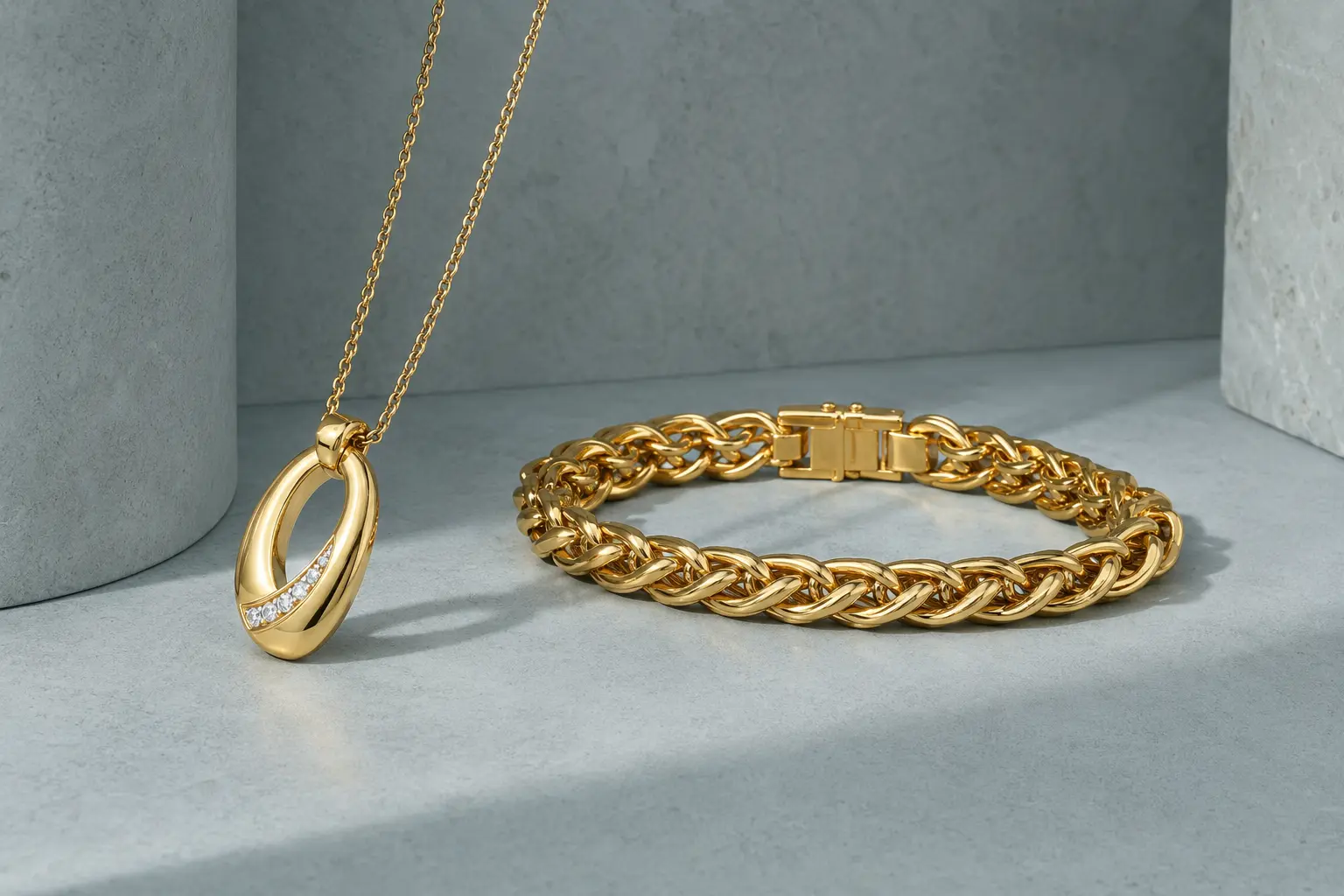
Türkiye combines established jewelry manufacturing depth with broad capability across chains, bracelets, bangles, rings, pendants and repeat wholesale categories. That capability is commercially useful only when the order is translated into a precise specification and the cross-border responsibilities are agreed before production begins.
1. Begin with a production brief—not a mood board
Reference images help communicate proportion and finish, but they do not define an order. A production-ready brief should identify karat, target net metal weight, dimensions, construction, closure, finish, quantity, tolerance, packaging, destination and required delivery window.
Where a buyer provides an existing design, ownership and permitted use of that design should also be clear. VAULTRADE Fine does not recommend asking a manufacturer to reproduce protected branded pieces.
2. Choose the source against the category
Türkiye is VAULTRADE Fine’s priority jewelry source because of its manufacturing breadth, export experience and competitive making structures. But “made in Türkiye” is not itself a specification. The correct workshop depends on the product form, construction, quantity, finish and delivery requirement.
3. Build the US requirement into the order
US buyers should confirm applicable marking, advertising, import and resale requirements with qualified advisers and their customs broker. The Federal Trade Commission’s Jewelry Guides address representations about precious-metal content and other product characteristics. The core commercial lesson is simple: karat, metallic content, weight, origin and product claims must be accurate and supportable.
The FTC Jewelry Guides explain the federal framework for jewelry representations. For import execution, merchandise entering the United States must clear US Customs and Border Protection and may be subject to duty and entry requirements; CBP advises that commercial jewelry imports at certain values require formal entry. Classification, valuation and entry treatment should be confirmed for the actual shipment.
Questions to settle before confirmation
- Who is importer of record?
- Which delivery term applies?
- Which product and origin descriptions appear on the commercial invoice?
- What quality, karat and weight records accompany the order?
- Who confirms tariff classification, duty and formal-entry requirements?
- What destination marking, labeling or responsible-party requirements apply?
4. Separate the commercial lines
A quotation should distinguish the gold value from the making charge and from freight, insurance, documentation and other transaction costs. This prevents an apparently low metal rate from obscuring manufacturing margin or delivery charges. It also creates a cleaner record for reorders when the gold market changes but the design remains the same.
5. Approve before scaling
For a new category, professional execution normally moves through a confirmed brief, quotation, reference or sample approval, production confirmation, checks, documentation and shipment. The approved reference should be linked to the order record so that a repeat request does not restart from an ambiguous photograph.
The role of a Dubai counterparty
VAULTRADE Fine sits between buyer requirement and manufacturing execution. We structure the brief, source against it, separate the quotation lines, document the confirmed order and coordinate shipment under the VAULTRADE name. The value is not another list of factories. It is a named counterparty responsible for turning the specification into an executable transaction.
US reference sources: FTC Jewelry Guides, 16 CFR Part 23; CBP guidance on importing jewelry; CBP import overview. This article is general trade information, not legal, customs or tax advice.