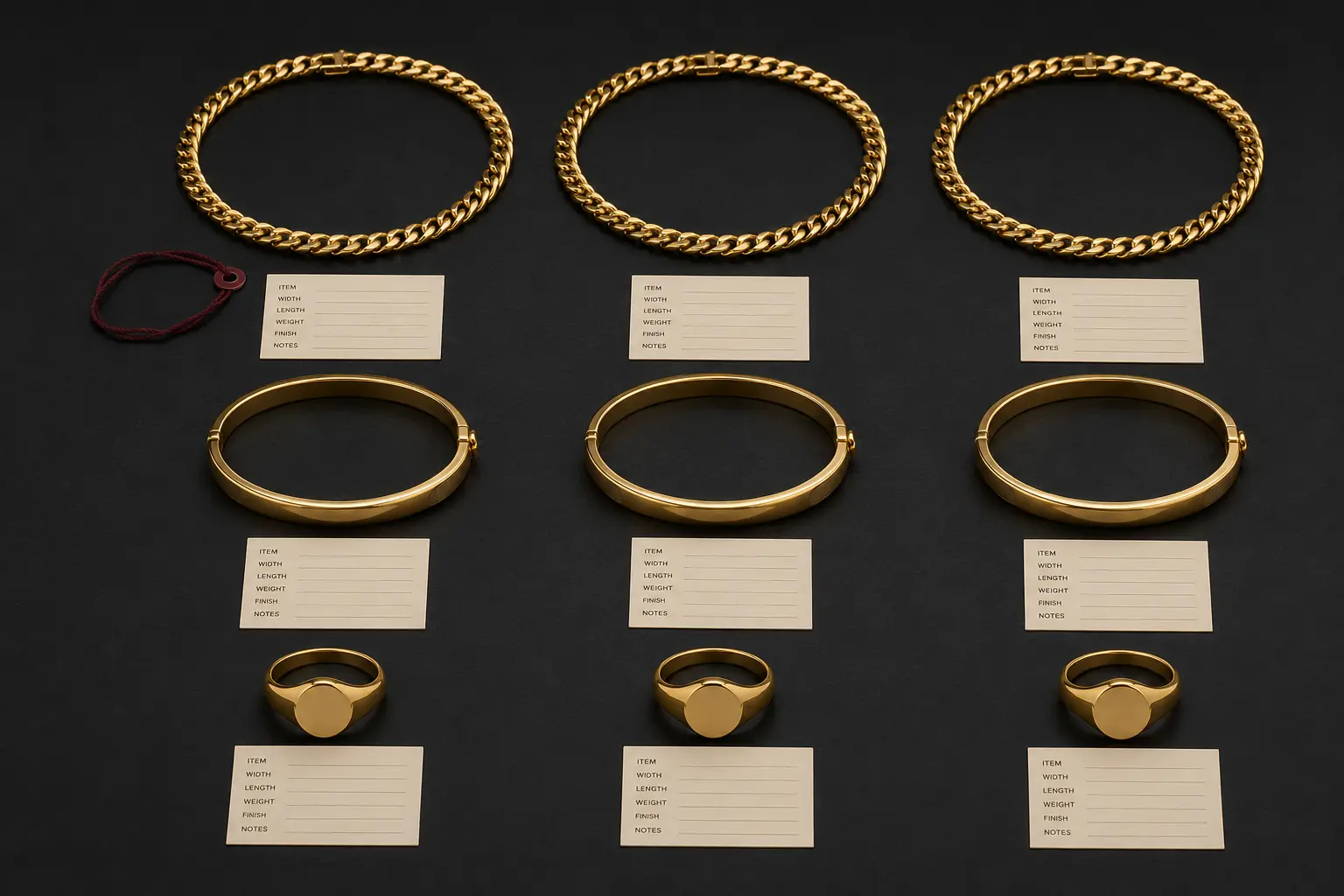
The first wholesale gold-jewellery order often absorbs the most attention. References are interpreted, dimensions clarified, target weights tested and finishing expectations aligned. If that information disappears into messages and memory, the buyer pays the same coordination cost again on every reorder.
1. Create an approved specification record
Once a piece is accepted, its commercial and technical variables should be recorded against a stable reference. The record does not need to expose proprietary manufacturing information; it must simply identify what the buyer approved.
2. Separate controlled and variable inputs
The approved design may remain fixed while gold value, order quantity, freight and delivery date change. A repeat quotation should distinguish the specification being repeated from the commercial inputs being refreshed.
- Controlled: product reference, dimensions, construction, finish and tolerance.
- Variable: metal basis, quantity, making charge where applicable, logistics and delivery schedule.
3. Reconfirm weight and tolerance
Gold is priced by weight, but finished jewellery cannot always be produced to an infinitely exact gram. The approved tolerance should be commercially realistic and should explain how final invoicing is handled when actual finished weight differs from the target.
4. Plan replenishment before stock reaches zero
A repeat programme works best when the buyer shares an indicative cadence. Monthly, quarterly and seasonal orders can require different production planning. A forecast is not necessarily a binding order, but it helps identify capacity, material and logistics decisions before urgency destroys margin.
Useful planning inputs
- Sales velocity by approved reference
- Minimum acceptable stock cover
- Seasonal peaks and promotion dates
- Expected pieces or weight per replenishment
- Required arrival date, not merely factory completion date
5. Keep changes visible
If a buyer changes width, closure, finish, weight or packaging, the revision should receive a new version or reference. Quiet changes are one of the fastest ways to create disputes about whether a repeat piece matches the original.
6. Review every received order
Repeat supply does not remove inspection. The buyer should review weight, finish, dimensions, quantity and documentation against the confirmed order. Any variance should be recorded promptly so the next production cycle begins from evidence rather than recollection.
The VAULTRADE Fine approach
VAULTRADE Fine structures the first order with the next order in mind. Confirmed specifications, approved references and written commercial terms create a cleaner basis for replenishment. The purpose is practical: reduce ambiguity, shorten clarification and protect consistency as the buyer relationship grows.